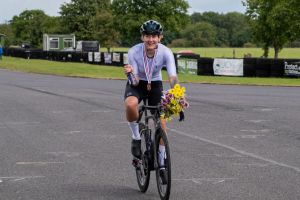
I have been on contraception injections for so many years and haven’t experienced periods since coming off contraception at the end of 2022. I started my first period in 2023, and I feel so much better. I am still learning about my cycle and how to adapt. Reflecting back I couldn’t imagine racing a full Ironman distance triathlon on my period. In racing and training in 2023, I remember feeling so weak and tired, thinking my cadence was low, yet having some of the best performances.
So let’s talk about periods! This affects everyone around you, it could affect you, your partner, your friends, your family, your teachers and/or team mates.
I have invited guest stars Emma Pallant and Andy Turner to provide their valuable insights.
Training and Racing on Periods
Can the menstrual cycle affect a female athlete’s performance during a race?
Yes, the menstrual cycle can affect a female athlete’s performance during a race. This is because hormonal fluctuations during the menstrual cycle can cause changes in the body that may impact physical abilities, such as endurance, strength, and coordination. Menstrual symptoms such as cramps, bloating, and fatigue may also affect an athlete’s performance. However, every woman’s experience is different; some may not experience significant performance changes during their menstrual cycle. Female athletes must listen to their bodies and adjust their training and competition schedules accordingly.
How does the menstrual cycle impact female athletes’ training regime?
The menstrual cycle can significantly impact female athletes’ training regimes. Hormonal fluctuations during different cycle phases can affect energy levels, strength, and endurance. For example, estrogen levels rise during the follicular phase after menstruation, increasing carbohydrate metabolism and improving endurance. On the other hand, during the luteal phase, which happens before menstruation, progesterone levels rise, leading to a decrease in carbohydrate metabolism and a reduction in endurance. This means you’ll feel tired and sluggish and may need to focus on strength training instead of endurance. Female athletes must understand these body changes and adjust their training to ensure optimal performance.
Remember to listen to your body – if you’re feeling tired or sore, taking a break and giving yourself some extra self-care is okay. With a bit of planning and awareness, you can make your period work for you instead of against you.

How do female athletes cope with menstrual symptoms during races?
Female athletes have to deal with menstrual symptoms during races, which can be challenging. Some athletes use contraceptive pills to regulate their menstrual cycle and reduce symptoms such as cramps and bloating. Others use tampons or menstrual cups to manage bleeding during a race. Athletes may also adjust their diet and training regimen to mitigate symptoms. Female athletes need to listen to their bodies and take care of themselves, as pushing too hard during menstruation can lead to injury or other health complications.
What measures can race organisers take to accommodate female athletes on their menstrual cycle?
Race organisers can take several measures to accommodate female athletes on their menstrual cycle. These measures include providing access to menstrual products such as tampons and pads in restroom facilities, allowing for frequent restroom breaks, and offering a private space for changing and addressing menstrual-related needs. Providing access to menstrual products such as tampons and pads can be a lifesaver for athletes caught off guard. In addition, organisers can consider adjusting the timing of events or allowing female athletes to start at a later time if they are experiencing discomfort or pain due to their menstrual cycle. These steps can help create a more inclusive and supportive environment for female athletes.
How can society overcome the stigma surrounding the menstrual cycle and sports?
One way society can overcome the stigma surrounding menstruation and sports is by increasing education and awareness about the topic. This can involve educating coaches, athletes, and the general public about the menstrual cycle and how it affects athletic performance. Additionally, providing access to menstrual products in sports facilities and locker rooms can help normalise the conversation around menstruation. It’s essential to create an environment where menstruation is viewed as a normal bodily function rather than something to be ashamed of or hidden. By breaking down the taboo and stigma surrounding menstruation, we can create a more inclusive and supportive environment for all athletes, regardless of gender.
Introducing Emma Pallant – GBR Elite Champion
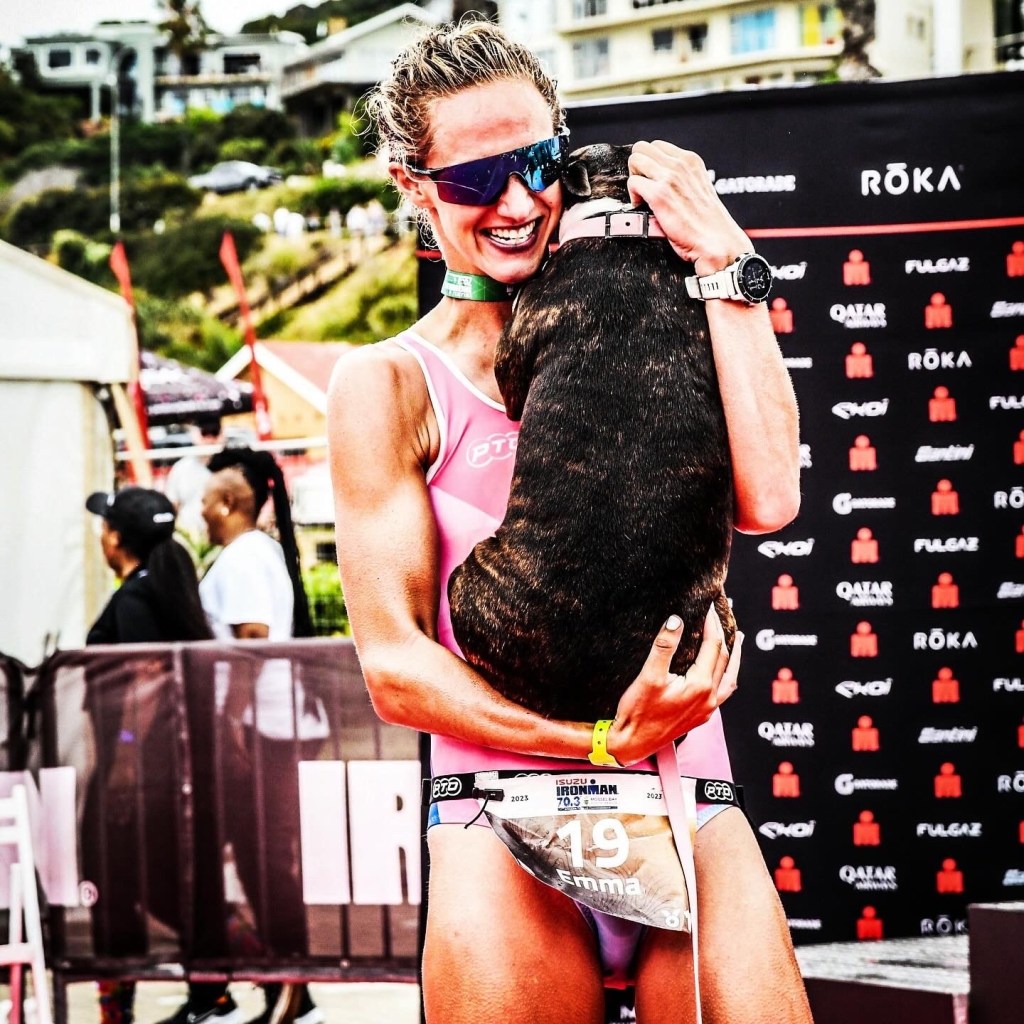
“Earlier this year, the whole world saw me competing while menstruating. Some said that not hiding it was courageous, and others said that it was outrageous. I say that it was neither – it was normal. What is not normal, is that 1 in 2 menstruating teens skips sports, fearing leakage.
So, instead of hiding your periods, @knix and I invite you to #SportYourPeriod 🔴 for periods in sports. By sporting my period 🔴 to show that I am menstruating while practising the sport I love, I want to encourage every menstruator to feel confident anytime they want to be active. If you want that too, let’s end period stigma. Wanna join us in this barrier-breaking movement? Go to SportYourPeriod.com“
Have you noticed any changes in your performance during different stages of your menstrual cycle?
“I find it most challenging to compete when I am actually on my period on the first day, as I bleed pretty heavily. The day before, I feel bloated and more tired. My Heart Rate and body temperature sit a bit higher, and I find it harder to push power; my upper quads feel a bit heavier, and I carry more water but can dehydrate faster. But a few days after my period and then a week after that, I always feel like I have good energy, and I would say, if anything, I am more alert and feel more at one with my body.”
Can you share tips or advice for other athletes on managing their periods while training and competing?
“Personally, I went a long time without having a period, so I haven’t tried to manipulate or play around with the timing of my period at all; I would like to have it consistently, so I try not to change my training around it because I know that I won’t be able to choose my big races around it so instead I train as I would and learn ways that help manage the symptoms. Recently, I found that using a menstrual cup works better than using a tampon for my heavy days competing. I also know I must hydrate a bit more even though I feel bloated and like I am holding fluid because my heart rate and temperature run higher. I tend to ease off the power on the bike to control my heart rate whilst racing, and I have found these ranges from testing it in training. I will eat a bit more to keep calories high and do more fire-ups in the warm-up to get myself more alert and ready for the start. I also use cooling methods such as putting ice down my top at aid stations and wearing less clothing.”

How do you prioritise self-care during your menstrual cycle to ensure you perform at your best?
“I sleep more if my body is feeling fatigued, and I make sure my iron levels are high. If I miss a period or get a painful one, then I talk to people and try to find out why it might have happened. I may have pushed the training load too much or needed more calories. I also read a lot of literature about recent studies on periods in sports to learn more about the body and trial recommendations in training.”
What advice do you have for athletes who may feel embarrassed or uncomfortable discussing their menstrual cycle with their coach or team?
“To find someone who has the knowledge that they do feel comfortable with. If there is just one person in the team they feel comfortable with, then talk with them and see if they feel confident to bring it up in the group and enter the conversation through them. I think also looking into the reason why you might feel uncomfortable, what makes it feel like an embarrassing conversation for you and then telling someone you trust so they can help you break through these barriers and make you feel confident in seeing it as an essential subject to be well versed on. The more knowledge that can be shared, the more this area can progress for females in sport and break down this drop out of females in sport or this drop in participation that we see through the teenage years.”

How do you maintain a positive mindset and stay motivated during your period?
“Having not had a period in the past, I am grateful to have one now and totally associate it with having a healthy body. It’s a sign that I am looking after my body well, and all is working as it should, so I view having a period as a positive!”
Finally, what overall message would you like to share with other athletes regarding periods and menstrual health?
“Let’s talk about them more; we still have so much to learn about periods in sports, so many conversational barriers to break through, and significant research and knowledge to be shared. The female body is beautiful, and we should be proud of it and look after it. The more we know about it to help reach our potential and increase females in sports, the better. So, let’s empower each other, support each other, and share our stories and knowledge.”
Introducing Andy Turner – Ex-professional cyclist and now a professional cycling coach, performance analyst, and sports director.
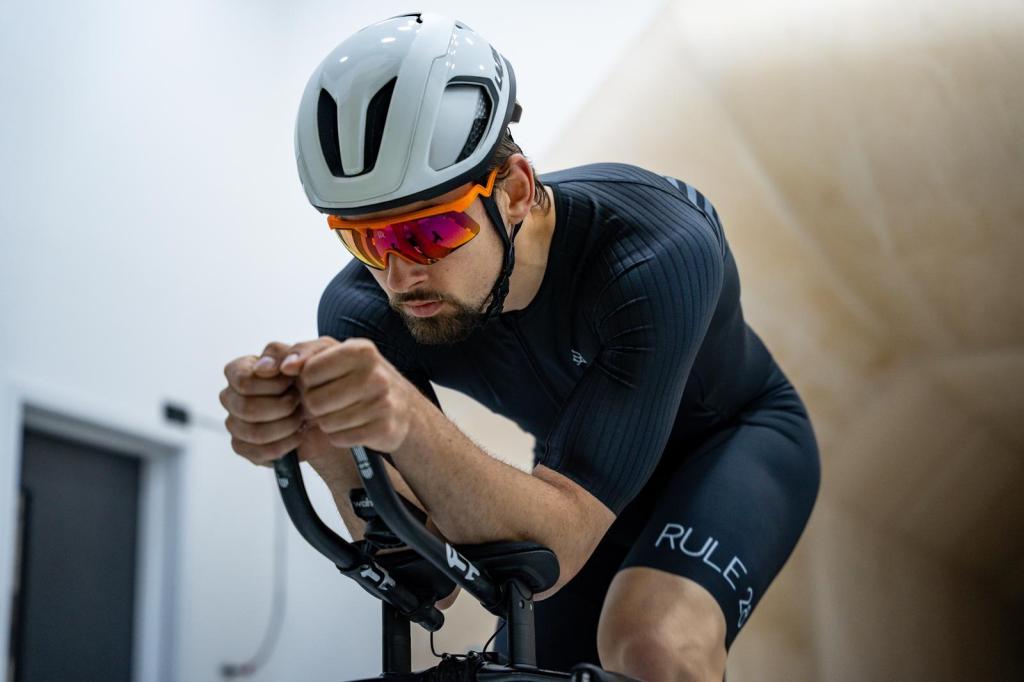
Andy is a Sports and Exercise Scientist who has been coaching since 2017. Previously a professional cyclist at continental level, he is now a full-time coach and performance analyst, coaching riders of all levels, from amateur to Olympic athletes. He is also a DS (Sports Director) for the Halesowen Academy and Tofauti Everyone Active Junior men’s and women’s teams, where he uses his racing and coaching experience to help the riders reach their best.
“Having spent the last seven years working with and coaching athletes, I was surprised by how few coaching resources there were for coaches surrounding menstruation and the effects on training and performance in athletes. Over the last few years, I have seen that this has started to change, but female athlete-specific research is still quite limited. The new issue, however, is that research is stuck around statistical significance and sometimes fails to acknowledge the individual variances. I make sure to listen and learn from the female athletes I work with and female athletes and researchers who are vocal on the topic to better my coaching for female athletes and ensure that their training, nutrition, strength and conditioning, and overall support are optimised as best as possible for them”.
How does menstruation affect an athlete’s performance?
“There’s a lot of research around the effects of menstruation on athletic performance. What’s interesting is that the general finding suggests that there are no statistically significant effects on performance due to menstruation. However, when you dig into the details, the reason there isn’t a significant effect in the research is because, in most cases, the effect of menstruation on athletic performance is very individual.
The changes in hormones and the changes in substrate metabolism across the phases of the cycle are fairly consistent; however, their effects on the individual appear to vary. The biggest variance tends to be the effect on mood and also pain. There are riders I work with who feel they perform best during ovulation, some who feel best during their period, some who have bad pains during their period, and others who have bad pain the week leading up to it. This and the effect on mood changes how they perform in different types of training sessions.”

How has your experience with periods shaped your approach to coaching female athletes?
“Obviously, as a man, I don’t have first-hand experience with periods, so however much reading I do or speaking with athletes, I’ll never fully understand the effects of the menstrual cycle on performance.
What has helped me massively, though, is talking with the female athletes I work with. Everyone is an N=1 case, where the effects of menstruation and how they want to talk about it are completely different from athlete to athlete. The biggest thing I’ve learned is that athletes need to feel comfortable and supported, whatever their choices are. I always ask female athletes about their cycle, how it affects them individually, and what training changes are best made to work with their cycle for them as soon as I start working with them. Some prefer not to go into details, and I’ll respect that, whereas others are very detailed, which helps me get a better understanding. The key thing is being supportive of whatever the athlete’s choice is.
For the most part, the biggest factor affecting performance/training for female athletes is pain and discomfort, along with mood. If there is a phase where the mood is low, often I’ve found it best to avoid peak power performances because of the effect not hitting those power targets can have on the athlete’s mentality. With pain levels, sometimes this is bad enough that we have to suspend training for 3-5 days, and I’ll adjust the rest of the plan accordingly. Then, we have the training cycles themselves. I don’t think anyone I work with has a consistent 28-day cycle, so training is not a rigid weekly structure. There are, of course, work days and weekends to consider, but the effects of the menstrual cycle are considered just as much as that when determining build phases, key sessions, and endurance rides, often with a degree of flexibility.”
Have you noticed any differences in performance between female athletes who are menstruating and those who are not?
“In terms of effects on performance, the biggest factors appear to be menstruation-related pain or mood. For those who suffer from bad cramps, this affects performance significantly. There are electrical stimulating devices that have been found to be useful in managing menstrual pains and cramps for some athletes, but for others, these have not been effective. The effect on mood can also impact motivation, so for this, I find that more care and communication are needed around the lead-up to events where potential elements of self-doubt or worry can be more likely. Equally, though, there are plenty of female athletes that I work with where there are no effects from menstruation or their cycle on either mood or pain. Hence the need for an individual approach.”

Have you noticed any changes in attitudes toward menstruation and sports since you first started coaching?
“I would say that there is less of a stigma around talking about menstruation now than when I started. Quite often in the past, the subject of menstruation was almost taboo, with blue liquid being used for period product advertising instead of red because red is too much like blood?! However, now there appears to be a lot more open conversation about it in scientific literature, sporting magazines, social media, and within the coaching community. The key thing with coaching is the coach and athlete relationship, and if an athlete feels they can’t talk about something that can impact their training, then this will affect the relationship.”
Like what you read? You can buy me a coffee here ☕
 Daniella Florence
Leave a comment